
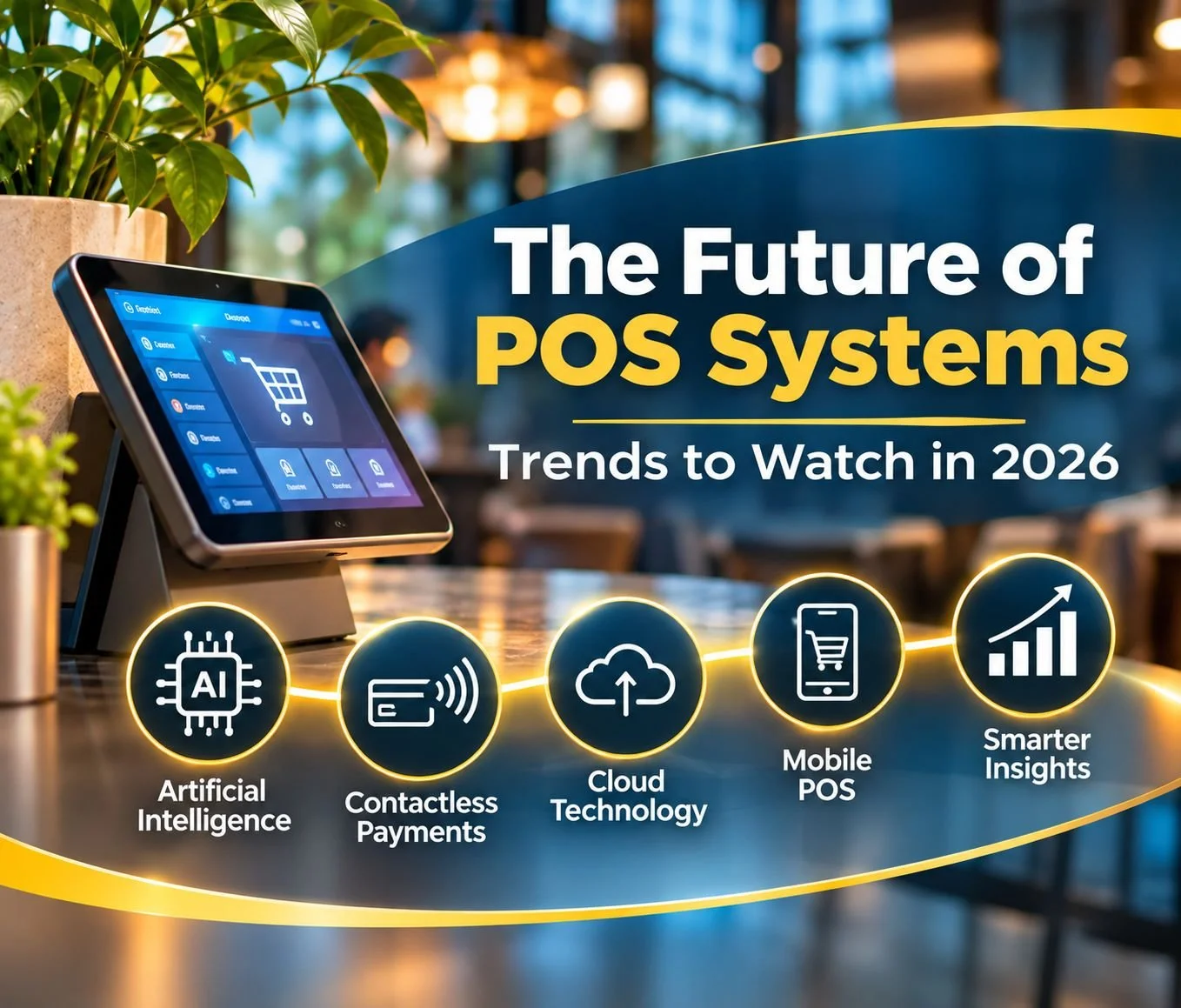
Point-of-sale technology has evolved far beyond traditional cash registers. Today's POS systems help businesses manage inventory, process payments, analyze sales, and improve customer experiences. As technology advances, these systems are becoming even more powerful, connected, and intuitive.
In 2026, artificial intelligence, contactless payments, mobile technology, and cloud-based software are influencing the future of POS systems. Businesses can use these innovations to simplify daily operations and make more informed decisions. However, understanding which technologies deliver practical benefits remains essential when investing in new equipment.
At Retail Systems Inc. (RSI), we help businesses navigate changing POS technology and find solutions that support their goals. Whether you operate a restaurant, retail store, or specialty business, staying informed helps you prepare for future growth.
Let's explore the most important POS system trends in 2026 and how they could benefit your business.
What Is the Future of POS Systems in 2026?
The future of POS systems centers on smarter technology, greater flexibility, and more connected business operations. Instead of simply recording transactions, modern systems help businesses understand customer behavior, manage resources, and improve operational efficiency.
POS technology is also becoming more accessible to businesses of different sizes. Cloud-based software, mobile devices, and integrated payment solutions offer alternatives to traditional checkout configurations. Meanwhile, emerging artificial intelligence capabilities are creating new opportunities for automation and business analysis.
Some of the most important POS trends in 2026 include:
Artificial intelligence and machine learning
Smarter, more intuitive POS interfaces
Touchless and contactless payment processing
Cloud-based POS systems and remote management
Mobile POS technology and flexible checkout
Advanced inventory management and automation
Integrated online and in-store shopping experiences
Stronger payment security and data protection
Personalized customer experiences
Scalable POS solutions for growing businesses
Not every system offers these capabilities, and some technologies remain in development. However, understanding these trends helps businesses choose technology that meets current needs while preparing for future opportunities.
1. Artificial Intelligence Is Changing POS Systems
Artificial intelligence (AI) is becoming an increasingly important consideration in modern POS software development. AI-powered tools can analyze information, identify patterns, and help businesses automate selected tasks. These capabilities may support better decisions without requiring managers to review every transaction manually.
For example, AI-enabled reporting tools may help retailers identify purchasing patterns and forecast product demand. Restaurants could use similar technology to evaluate menu performance and anticipate busy service periods. These insights can support purchasing, staffing, and inventory planning.
Machine learning, a branch of artificial intelligence, identifies patterns within data and can improve predictions over time. However, its effectiveness depends on accurate information, appropriate configuration, and the quality of the underlying software.
Potential AI applications in POS systems include:
Sales forecasting and demand prediction
Inventory recommendations
Customer purchasing pattern analysis
Unusual transaction detection
Personalized promotions
Automated reporting and business insights
AI capabilities vary significantly between POS providers. Businesses should verify which features are currently available rather than assuming every modern system includes artificial intelligence.
As this technology develops, understanding its practical applications will become increasingly valuable for business owners.
2. POS Systems Are Becoming Smarter and More Intuitive
A powerful POS system should also be easy for employees to operate. Complicated interfaces can slow transactions, increase training requirements, and create unnecessary frustration. Consequently, POS software developers continue exploring ways to simplify daily tasks.
Modern touchscreen interfaces often feature organized menus, configurable layouts, and streamlined transaction workflows. Some systems also provide role-based access, allowing employees to view tools relevant to their responsibilities.
For example, restaurant servers may access ordering and table management functions through a simplified interface. Retail employees might use product search, inventory lookup, and checkout features from the same screen. These improvements help businesses reduce unnecessary steps during customer interactions.
More advanced platforms may also offer automated recommendations or context-sensitive information. However, these capabilities depend on the software and should be evaluated individually.
At RSI, we help businesses compare POS software solutions based on their operational requirements. Choosing intuitive technology can simplify employee training while supporting consistent service.
3. Contactless Payments Continue to Shape Customer Expectations
Payment convenience remains a major factor in the customer experience. Customers increasingly expect businesses to support multiple payment methods, including contactless cards and compatible digital wallets. As a result, payment flexibility remains an important POS trend in 2026.
Contactless payment technology commonly uses near-field communication (NFC) to exchange payment information over short distances. Customers can tap compatible cards, smartphones, or smartwatches against supported payment terminals.
These transactions can make checkout more convenient while reducing unnecessary handling of payment devices. Additionally, compatible systems may support secure payment authentication through established card network technologies.
Businesses considering updated payment equipment should evaluate:
Contactless credit and debit card acceptance
Apple Pay and Google Wallet compatibility
EMV chip payment support
Payment terminal security
Processing fees and merchant services
Compatibility with existing POS software
Contactless payments do not eliminate the need for traditional payment options. Businesses should still accommodate customers who prefer cash or other supported methods.
The right POS hardware and payment solutions can help businesses provide flexible checkout experiences without complicating daily operations.
4. Cloud-Based POS Systems Offer Greater Business Flexibility
Cloud-based POS technology continues to influence how businesses manage operations. Unlike systems that rely entirely on local infrastructure, cloud-connected platforms can provide remote access to selected business information. This flexibility helps owners monitor operations without remaining physically present.
Depending on the software, cloud-based POS systems may support sales reporting, inventory updates, employee management, and multi-location oversight. Authorized users can access supported functions through compatible devices and secure connections.
For example, a retailer managing multiple locations might compare sales performance from one centralized dashboard. Restaurant owners may review daily transactions and identify operational trends while away from their businesses.
Cloud technology also creates opportunities for software updates and connected integrations. However, businesses should evaluate internet requirements, offline capabilities, subscription costs, and security before choosing a platform.
Our article, How Cloud-Based POS Systems Improve Efficiency and Security for Modern Businesses, explains additional benefits of connected POS technology.
5. Mobile POS Technology Is Transforming Checkout
Traditional checkout counters remain useful, but they no longer represent the only way to process transactions. Mobile POS systems allow employees to complete supported tasks through handheld devices, tablets, and compatible smartphones.
Restaurants can use mobile POS technology for tableside ordering and payment processing. Retail employees can assist shoppers throughout the sales floor and complete purchases without directing everyone toward stationary registers.
Mobile POS solutions can support several operational improvements:
Faster checkout during busy periods
Tableside restaurant ordering
Flexible outdoor and event sales
Inventory checks from mobile devices
More personalized customer interactions
Additional checkout locations without permanent counters
For example, a retailer might use handheld payment devices during holiday shopping periods. Employees can assist customers and process compatible transactions throughout the store, reducing congestion around checkout stations.
Mobile devices must still meet security, connectivity, and software requirements. Business owners should also evaluate battery life, hardware durability, and payment processing compatibility.
Learn more in our article, Mobile POS Solutions: A Game Changer for Small Businesses.
6. Advanced Inventory Management Helps Businesses Reduce Waste
Inventory management remains one of the most valuable functions of modern POS systems. Businesses need accurate information to avoid stock shortages, unnecessary purchases, and missed sales opportunities. Connected inventory tools help organize this information and support more efficient purchasing decisions.
Many POS platforms update inventory records as transactions occur. Depending on the system, businesses may also receive low-stock alerts, review sales trends, or manage inventory across multiple locations.
More advanced systems may incorporate forecasting tools that help estimate future demand. These capabilities can support inventory planning, although businesses must still consider seasonal changes and unexpected customer behavior.
For example, a retail store might identify products that consistently sell faster during weekends. Managers can use that information to adjust purchasing quantities and improve product availability.
Restaurants may benefit from inventory integrations that monitor ingredient usage and food costs. However, accurate results depend on proper setup, reliable sales information, and regular inventory checks.
Our guide, How Mobile POS Improves Inventory Management, explores how connected technology supports more accurate inventory tracking.
7. Integrated POS Systems Are Connecting Online and In-Store Sales
Customers increasingly interact with businesses through multiple channels. They may browse products online, purchase in stores, or place restaurant orders through digital platforms. Managing these activities separately can create inconsistent information and unnecessary administrative work.
Integrated POS technology helps businesses connect compatible sales channels through shared information and connected software. Depending on the platform, these integrations may synchronize inventory, transaction records, customer information, and order activity.
For example, a retailer might sell the same product through its website and physical store. Connected inventory tools can help employees monitor product availability across both channels. Similarly, restaurant ordering integrations may send online purchases directly into existing preparation workflows.
These connected experiences are often described as omnichannel retail or unified commerce. Their goal is to create a more consistent customer experience across purchasing channels.
However, businesses should verify integration compatibility before selecting a POS provider. Not every platform supports every website, delivery service, or accounting application.
8. POS Security and Data Protection Remain Essential
As POS systems become more connected, protecting payment information and business data becomes increasingly important. Businesses must consider security when selecting payment terminals, cloud software, and third-party integrations.
Modern payment solutions may incorporate encryption, tokenization, access controls, and other protective technologies. However, individual security capabilities depend on the provider and configuration.
Businesses should also understand applicable payment security requirements. The PCI Security Standards Council provides information about protecting payment account data and maintaining secure payment environments.
Important POS security practices include:
Keeping software and devices updated
Using strong passwords and appropriate authentication
Restricting employee access by responsibility
Choosing reputable payment processing providers
Monitoring suspicious transactions
Reviewing connected applications and integrations
Following applicable PCI security requirements
AI-assisted fraud detection may become more useful as payment technology develops. However, automated systems cannot eliminate every security threat.
At RSI, we encourage businesses to evaluate security alongside convenience, cost, and functionality when choosing POS solutions.
9. POS Technology Is Supporting More Personalized Customer Experiences
Customer loyalty often depends on consistent service and convenient purchasing experiences. Modern POS systems can help businesses understand purchasing patterns and support more personalized interactions.
Depending on the platform, POS software may integrate with customer profiles, loyalty programs, and marketing tools. These features can help businesses recognize repeat customers and provide relevant promotions.
For example, a restaurant might offer rewards through a compatible loyalty program. A retailer could review purchasing patterns to identify popular products among returning customers.
Some emerging AI tools may eventually make personalized recommendations more sophisticated. However, businesses should evaluate whether these capabilities provide meaningful value before investing.
Customer information also requires responsible handling. Businesses should explain relevant data practices, follow applicable privacy requirements, and protect customer records.
Our article, The Benefits of Mobile POS for Customer Interaction, explains how flexible POS technology supports better service.
10. Scalable POS Systems Help Businesses Prepare for Growth
Business needs change as companies expand. A small restaurant may eventually add outdoor seating, delivery services, or another location. Retailers may introduce new product lines, expand inventory, or open additional stores.
Scalable POS systems help businesses accommodate changing requirements without necessarily replacing their entire technology infrastructure. Depending on the platform, businesses may add terminals, integrations, employees, or management capabilities.
For example, a growing restaurant could introduce handheld ordering devices as its dining area expands. A retailer might need centralized inventory management after opening a second location.
Before investing, businesses should consider:
Support for additional locations
Hardware and software compatibility
Employee and user account capacity
Integration availability
Reporting and inventory capabilities
Ongoing subscription and processing costs
Technical support and upgrade requirements
Planning ahead helps businesses avoid unnecessary disruptions when their operations change.
Our article, Why Small Businesses Should Choose Scalable POS Solutions, explains how flexible POS technology supports long-term business growth.
How Will These POS Trends Affect Restaurants and Retailers?
Although restaurants and retail stores share many technology needs, their operational priorities differ. Understanding these differences helps businesses identify which POS trends deserve the most attention.
Restaurants often prioritize fast ordering, kitchen communication, table management, and flexible payment processing. Mobile devices and connected ordering systems can help improve service efficiency. Our article, Optimizing Restaurant Operations with POS and Mobile Solutions, explores these opportunities.
Retail businesses may focus more heavily on inventory accuracy, customer purchasing patterns, and omnichannel sales. Connected POS technology can help retailers organize products, monitor transactions, and manage inventory across locations.
Both industries benefit from intuitive software, reliable payment processing, and accessible reporting. However, the best POS system depends on each business's specific requirements rather than the newest available features.
How to Choose a Future-Ready POS System
Keeping up with POS technology does not mean purchasing every new feature. Instead, businesses should identify the tools that address existing challenges and support realistic growth plans.
Start by evaluating your current POS system. Consider whether employees experience unnecessary delays, whether inventory information remains accurate, and whether reporting provides useful insights.
Next, identify features that could improve operations. Contactless payments, mobile devices, and cloud-based reporting may deliver immediate value for some businesses. Others may benefit more from inventory integrations or simplified employee management.
Finally, compare available POS providers and their support services. Evaluate hardware requirements, payment processing costs, software subscriptions, security, and implementation assistance.
At RSI, we help businesses navigate these decisions. Our team members work with clients to identify practical solutions without introducing unnecessary complexity.
How RSI Helps Businesses Stay Ahead of POS Technology Trends
At Retail Systems Inc., we understand that choosing a POS system involves more than purchasing equipment. Businesses need technology that supports daily operations, customer service, and future growth.
We offer POS solutions for restaurants, retailers, and specialty businesses. Our available options include Square, SpotOn, SkyTab, Clover, Heartland Restaurant POS, and other established platforms. Features vary by system, so we help clients evaluate available capabilities and integrations.
Additionally, RSI provides POS installation, training, and technical support services. Our team helps businesses understand their technology options and prepare employees for implementation.
Whether you're interested in mobile payments, cloud-based reporting, or more efficient inventory management, we're here to help. We focus on finding solutions that fit your business rather than promoting technology you don't need.
Preparing Your Business for the Future of POS Systems
The future of POS systems involves smarter software, more flexible payments, and increasingly connected business operations. Artificial intelligence and machine learning offer promising opportunities, while mobile and cloud-based solutions already support practical improvements.
However, successful technology investments require careful planning. Business owners should evaluate current needs, available features, implementation costs, and long-term goals before making changes.
At RSI, we help businesses understand emerging POS trends and select solutions that support efficient operations. With the right technology and support, your business can prepare for changing customer expectations and future growth.
Frequently Asked Questions About POS System Trends in 2026
Business owners often have questions about new POS technology and its practical applications. Below, we answer common questions about emerging trends, payment processing, and future-ready POS solutions.
What is the biggest POS technology trend in 2026?
Artificial intelligence is an important emerging trend, alongside cloud-based systems, mobile POS devices, and contactless payments. The most valuable technology depends on each business's operational needs.
How is artificial intelligence used in POS systems?
AI-enabled POS tools may analyze sales patterns, forecast demand, identify unusual transactions, and support automated reporting. Available capabilities vary by software provider and configuration.
Will AI replace traditional POS systems?
AI is more likely to enhance POS software than replace the need for transaction processing systems. Businesses still require reliable hardware, payment capabilities, and employee oversight.
Are contactless payments becoming standard in POS systems?
Contactless payment support is increasingly common in modern payment terminals. However, businesses should verify compatibility with their selected POS hardware and payment processor.
What are the benefits of cloud-based POS systems?
Cloud-based systems may provide remote reporting, connected inventory management, software updates, and multi-location oversight. Features and offline capabilities depend on the provider.
Can small businesses benefit from advanced POS technology?
Yes. Small businesses may benefit from mobile checkout, inventory tracking, intuitive interfaces, and accessible sales reports. The right features depend on operational priorities and budget.
How can businesses prepare for future POS technology?
Businesses should evaluate current systems, identify operational challenges, and compare scalable solutions. Working with an experienced POS provider can help simplify the selection and implementation process.
Get Your FREE POS Analysis from RSI
Is your current POS system ready for the future? At Retail Systems Inc., we help businesses explore modern POS technology that supports efficiency, customer satisfaction, and long-term growth.
Whether you're considering contactless payments, mobile POS devices, or advanced reporting tools, our team can help. We'll work with you to evaluate solutions that match your business needs.
Request your FREE POS analysis today! Complete our online contact form or call us toll-free at 1-800-849-5642. Let RSI help you find the right POS solution for your business!